Set item layout:
The Ninth Seal Contingency Array
wondrous item, legendary (requires attunement)

A circular brass lattice worn as a crown, collar, or integrated into armor. It hums faintly whenever powerful fiends are nearby.
Fiendish Resistance
You have advantage on saving throws against spells and effects cast by fiends.Contingency Seal Protocol
When a fiend you can see within 60 feet casts a spell or activates a teleportation or planar ability, you can use your reaction to trigger a seal response.The creature must succeed on a DC 18 Charisma saving throw or the effect is negated, and the creature is briefly bound by overlapping sigils until the end of its next turn. While bound, it is restrained and can’t take reactions.
If the negated spell or effect was 3rd level or higher, the target also takes radiant damage.
This reaction can be used once per short or long rest.
Lore
The Ninth Seal Contingency Array is not listed among Cassiodora Inayaris Pompellini Xifilius’s early works, nor does it appear in any of her workshop catalogs distributed through Waterdeep’s artificers’ guild. Its origins are instead found in a sealed correspondence archive between Cass and a number of unnamed planar wardens who, by all available accounts, had stopped using the word “emergency” because it no longer felt meaningful.
The design began as a philosophical disagreement about inevitability. Cass had spent years building tools that reacted to problems after they became measurable. The wardens insisted that certain categories of intrusion did not deserve the dignity of reaction time. What followed was not a collaborative project so much as a prolonged argument conducted through increasingly complex diagrams. One side proposed containment, the other proposed prevention, and Cass, characteristically, proposed both layered so tightly together that causality would struggle to find purchase.Early prototypes were unstable in a way Cass described as “overly honest.” They attempted to respond to fiendish magic before it fully resolved, resulting in brief moments where spells appeared to be interrupted by the concept of interruption itself. Several testers reported sensations of reality “flinching” when the array activated. Cass took this as encouraging data.
The final array was forged as a circulating lattice of brass and sigilwork, designed to be worn rather than placed, so that the wearer could become the point at which reaction and refusal coincide. When triggered, it does not counter magic in the traditional sense. Instead, it asserts that certain actions were never granted permission to complete, and then enforces that interpretation with aggressive administrative clarity. Fiends subjected to it describe the experience as attempting to continue an argument after the conclusion has already been officially recorded.
The naming of the device remains the subject of quiet speculation. There are no records of an “eighth seal,” and Cass refused to answer questions about the numbering beyond a single marginal note: “The others were not necessary once I understood the pattern.” Whether this refers to earlier inventions, failed theoretical layers, or something more troubling is left deliberately unresolved in the surviving documentation.
What is known is that the Ninth Seal is not a weapon in the conventional sense. It is a final objection made physical, worn by those who expect to be present at the moment when reality attempts to permit something it should have already denied.
Tags:advantagefiendloreresistanceteleportation
Related content

Abyssal Anchor Spike
wondrous item (consumable), very rare
A heavy, rune-etched iron spike designed to be driven into reality itself.

Temporal Dome
wondrous item, legendary
A magical crystal orb that creates a localized area of accelerated time when placed on the ground.
Portable Cover Generator
wondrous item, rare
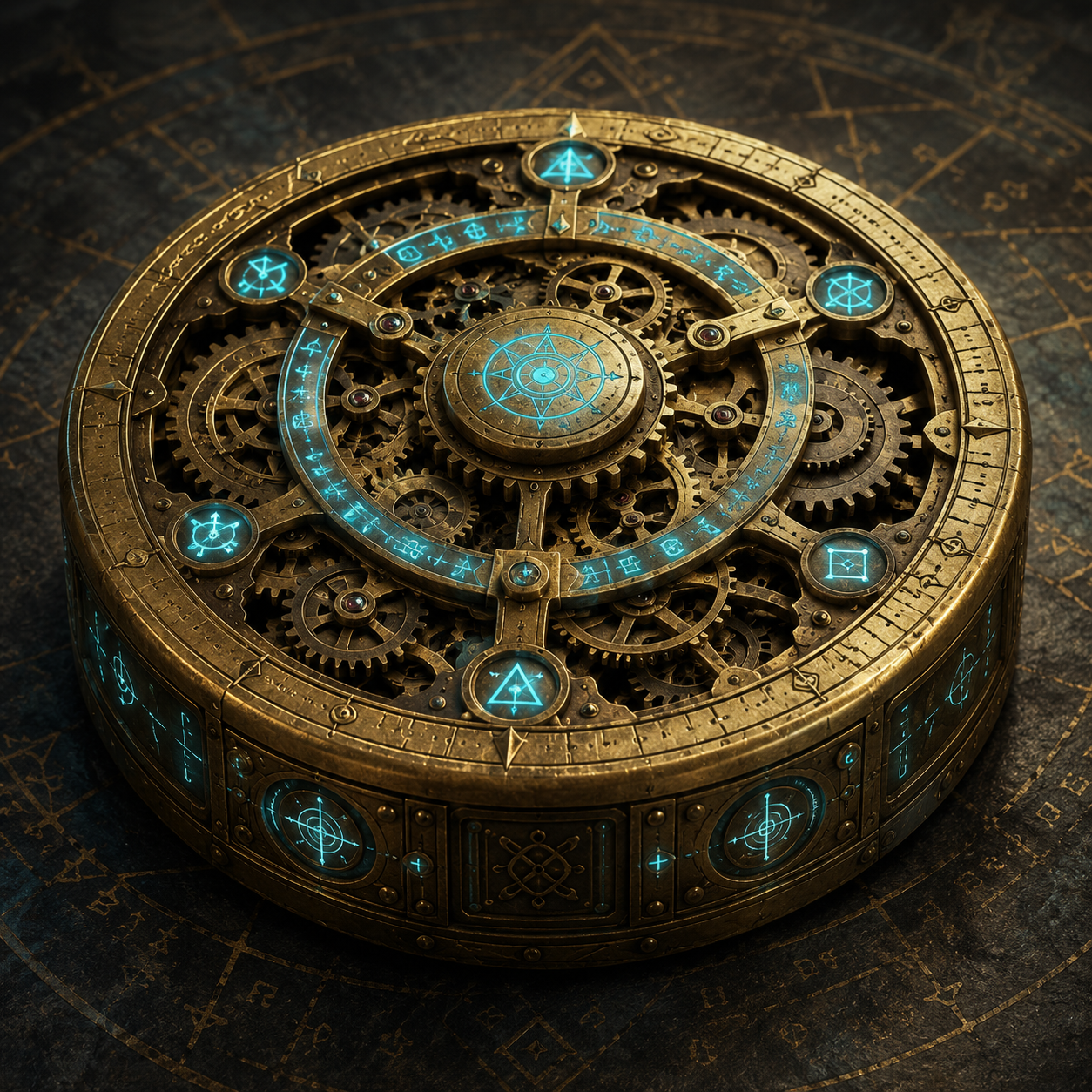
A thick brass puck covered in rotating gears and glowing arcane indicators.
Emergency Staircase
wondrous item, uncommon
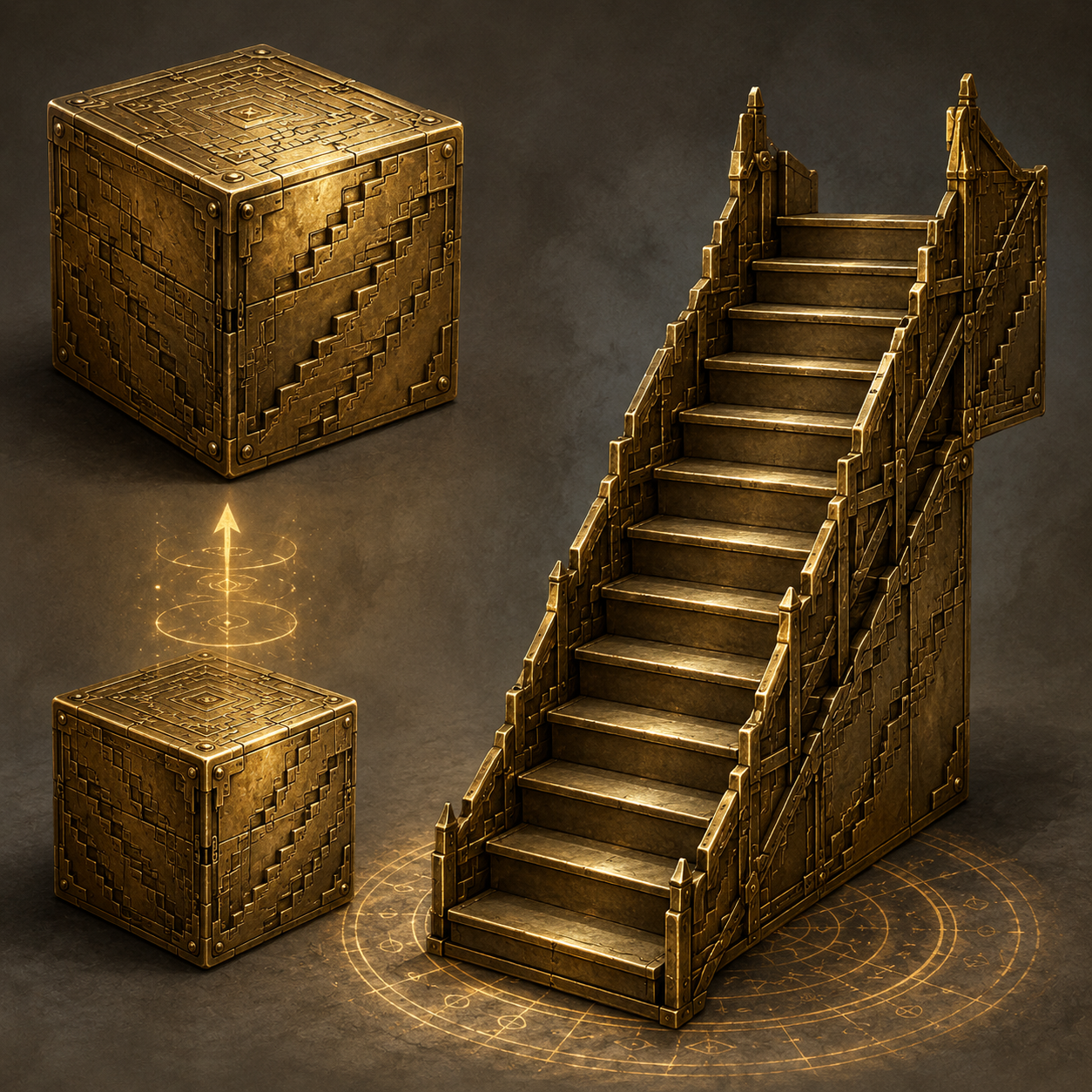
This polished brass cube is covered in tiny engraved steps and folds.

Temporal Correction Device
wondrous item, rare
A silver pocket watch whose hands occasionally move backward for a fraction of a second.